Morning and evening routines for multilingual children are opportunities to nurture your family’s minority language(s). Simple daily routines or rituals can be special moments for the home language(s) to become a stable and meaningful part of family life.
The Importance of Routines and Rituals for Multilingual Children
Routines and rituals are meaningful moments, marked by repetition, consistency, and predictability. They give children a sense of security in a world that, for them, is still full of novelty and uncertainty. Especially when shared with an important loved-one (parent, relative, friend, nanny, etc.), routines are valuable opportunities to strengthen the emotional bond between the adult and the child.
In turn, moments that are characterized by calm, affection, and a sense of protection are fertile ground for language development, because they help create positive associations between the comfort and enjoyment of the moment and the language being used.
In this blog, we’ve already talked about routines and rituals in the home language(s). Today, we’re focusing on the specific moments of morning and evening.
In general, the best activities to include in morning and evening rituals are:
- simple
- easy to repeat
- consistent
- predictable
- enjoyable (for you and for the children)
If you choose activities that are too complicated, time-consuming, or unpleasant, it will be hard to keep up with them over time. It’s better to pick a few things that are easy and enjoyable, so you can repeat them effortlessly for days, weeks, and months (or even years!).
Below, you’ll find some simple and practical ideas in the home language that you can try out with your child. Let’s start with the evening, since some bedtime routines help prepare for the next morning.
Evening Routines in the Home Language for Multilingual Children
What did you do today?
Every parent knows that asking “What did you do today?”, especially right after school, can get only one of two answers: “Nothing” or “I don’t remember.”
Right after school (or daycare), children need to process the experiences they’ve had during the day. It is important to give them the time and space to process, while also being quietly present. This way, if and when they feel ready to share, they know they’ll find listening ears and welcoming arms.
These conversations often come up during cozy, relaxed moments in the evening – while getting ready for bed or right before or after reading a bedtime story. In those moments, it’s important to both listen and be present to offer the right words, if needed, especially if the child is still learning how to express themselves – whether in general or in the minority language – to describe and process events and emotions.
This is a delicate time that each parent will manage based on their own sensitivity and their child’s temperament. I recommend recasting: repeat what the child said, just as it was, without adding or interpreting, and ask for confirmation.
“So today at school you read a book about Halloween. Is that right?”
When helping children figure out their emotions, offering examples can be helpful.
For example, for a long time my children only used the word “scared”; “I’m scared” was their catch-all expression for expressing any kind of discomfort.
My husband and I gently supported them in exploring, understanding, and naming those emotions, each in our own home language. We asked questions such as: “How does this make you feel?” “Where do you feel this in your body?” “Are you feeling sad? Scared? Anxious”. Sometimes our children are able to identify an emotion: “Yes, I feel sad”. Other times, they’ll say “I don’t know. I’m just scared.” It’s all ok! But it’s important to keep offering language to help them learn to identify and express their emotions.
Preparing Backpacks and Clothes for the Next Day
Preparing backpacks and clothes for the next day is a simple and effective evening routine, not to mention very useful for saving time and avoiding stress during the morning rush!
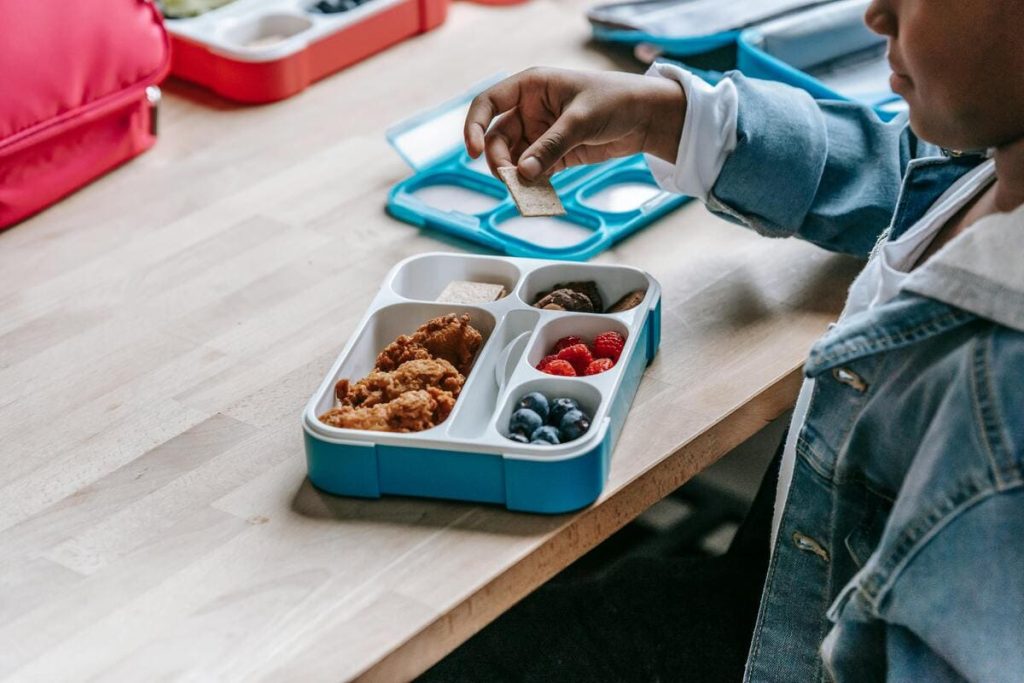
Using the home language(s), get your children involved in preparing what they’ll need for the next day, according to their age and abilities,
You can start with yes/no questions or offer two or three choices, then gradually move toward open-ended questions.
Example 1: Look, here’s tomorrow’s weather. Do you see the cloud with rain? What do you think, should we get your rain boots ready? (yes/no question)
Example 2: What should we pack for snack tomorrow: crackers, pretzels, or an apple? (three options)
Over time, the second example can evolve into: What would you like for your snack tomorrow?
With children who can already read and write, you can prepare a weekly menu together in advance (for example, on Sunday). Then, each evening, the child can check what’s on the lunch plan for the next day and prepare accordingly, either independently or with your help.
If you’re looking for guidance on your family’s multilingual journey, I’d be happy to support you.
Evening Reading in the Home Language(s)
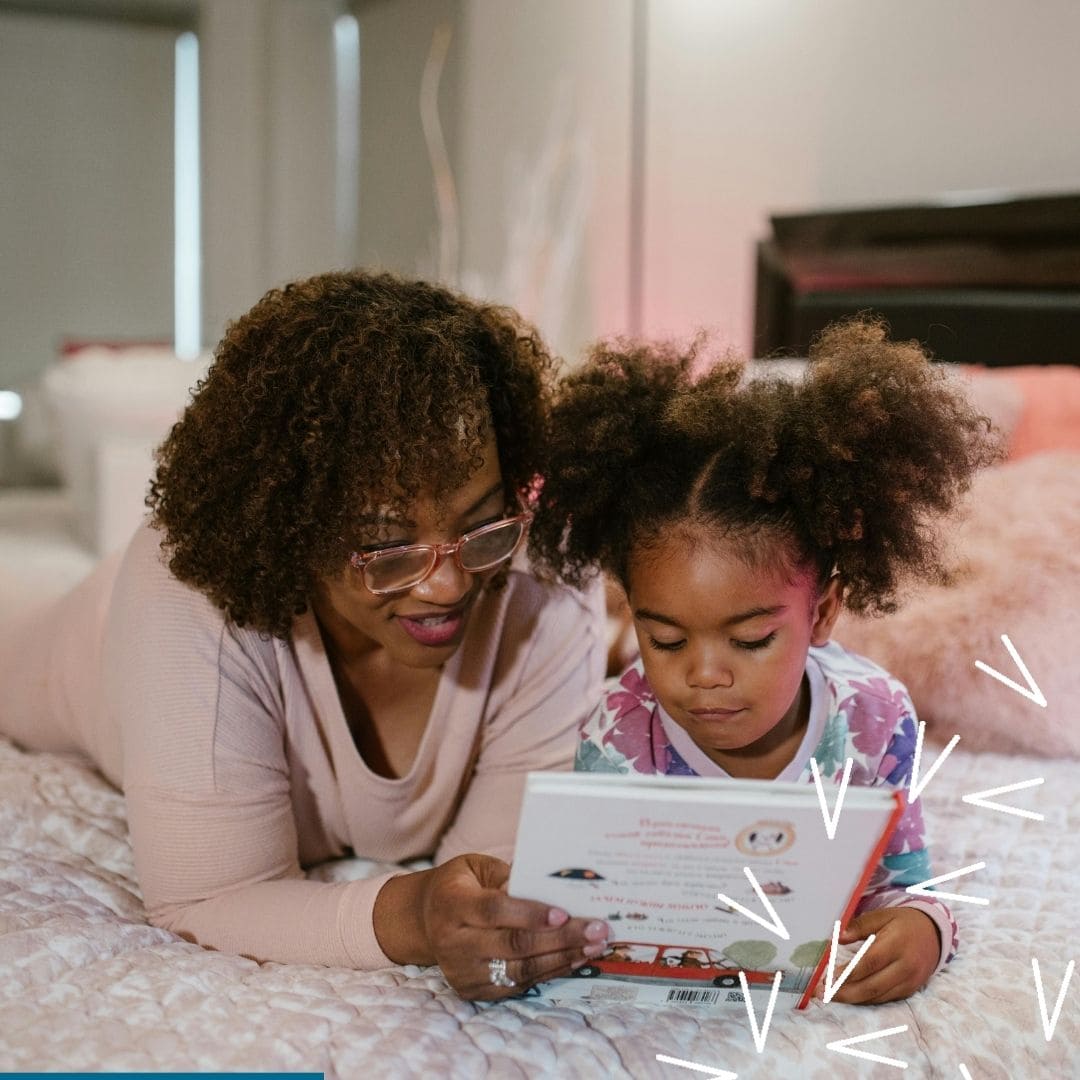
Shared evening reading is my favorite nighttime ritual. If it’s something you enjoy too, reading together in the home language(s) is a powerful way to strengthen emotional bonds and support language development.
In multilingual settings, reading daily in the minority language(s) helps build positive associations with the language and naturally expands vocabulary and language skills.
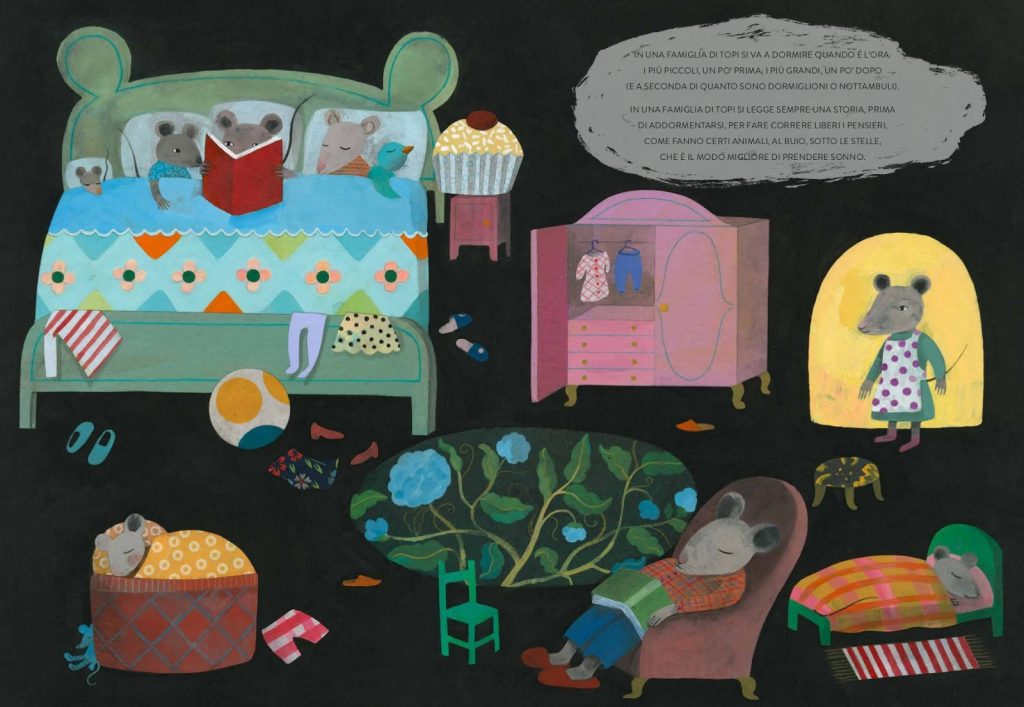
If you’d like to further the topic of shared reading in multilingual families, I wrote an in-depth article on the topic.
Morning Routines in the Home Language(s)
So we’ve prepared backpacks, clothes, lunches, and snacks – and hopefully the night went smoothly. What morning routines in the home language can we do the next morning?
Morning Songs
If your family is full of energy first thing in the morning, your routine might include a morning song.
The song I use to open my home language groups for children starts with the words “Good morning, the sun is shining.” The song goes on to list all the things we can do on that day (which I change at will based on what we’ll in fact do: singing, playing, eating, dancing, and so on).
As we’ve discussed in other posts, music and songs are powerful allies for multilingual language development.
Breakfast is Served (in the Home Language!)
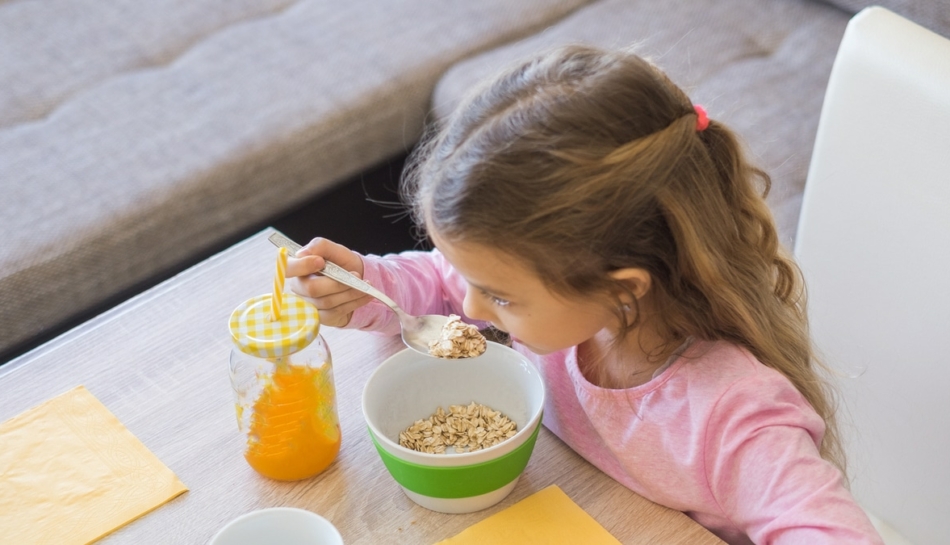
Breakfast is also a great moment to build vocabulary in the home language(s). As we mentioned earlier with snacks, you can start by describing what you’re making and eating. Begin with closed questions, then move on to more open-ended ones, and involve your child in preparing the meal. Combining language with action, especially when the activity is enjoyable, is always a great way to support language learning.
Repeating familiar expressions every day reinforces comprehension and encourages active use of the minority language right from the moment they wake up.
Word Games on the Way to School
The trip to school, whether you walk, drive, bike or take public transportation, is another great moment to add a home language activity. When I was little, my mom used the ten-minute car ride to quiz us on multiplication tables, poems, and other notions we were supposed to memorize.
With my own kids, we often use that time to sing (see above) or play word games. Sometimes we combine both and “sing” the games.
The simplest game is naming what we see out the window (I spy...). We also love to play the twenty questions game in Italian.
If your family enjoys these games, I encourage you to take advantage of it: they make for excellent pre-reading and pre-writing activities.
How to Keep Up with Home Language Routines
Being Consistent Over Time
For morning and evening routines in the home language to give results, it’s important to keep them consistent over time. This means maintaining the use of the home language during the same key moments of the day, for example, upon waking, during breakfast, while preparing backpacks, or reading a book before bedtime.
For this reason, it’s important to choose activities that are enjoyable and manageable even amid the daily hustle and the unexpected incidents that come with having young children.
Getting the Whole Family Involved
Another key element to support morning and evening rituals in the home language for children is involving the entire family. As the saying goes, there’s no stronger motivation than leading by example: parents who use the home language regularly and consistently set a concrete example for their children. Especially if one parent is not a native speaker, showing enthusiasm and persistence in using the language has a positive impact and motivates the children to do the same.
If there are siblings, even better! Brothers and sisters are important linguistic and emotional role models.
Start Now with Morning and Evening Routines in the Home Language(s) in Your Family
Incorporating home language routines in the morning and evening with your children is a simple yet powerful way to nurture the minority language in a multilingual context. Consistency, repetition, and the involvement of loving family members can turn small daily gestures into meaningful opportunities for emotional and linguistic growth.
If you need help or support in creating personalized language routines or finding practical ideas to get started, contact me! I’ll be happy to guide you with tailored suggestions for your family.